Blake Swicord
959 United Avenue SE
Atlanta, Georgia 30316
Additional Affiliations:


|
No Date Provided
Authority: Georgia State Patrol |
To ensure fair trials, the Supreme Court of the United States established the Brady Doctrine, which obligates prosecutors in every case to investigate, obtain, and disclose all information regarding any individual whose testimony or professional conduct may affect the integrity of judicial proceedings.
The Brady List is the definitive public-facing platform of record for accountability information and potential impeachment disclosures involving Law Enforcement Organizations [LEOrgs], Prosecutors, Judges, and government agents. The platform includes records of officer misconduct, decertification, public complaints, use-of-force reports, do-not-call listings [Giglio letter], and other materials relevant to due process, transparency, and the preservation of justice within the legal system.
This platform is available as-a-service to all Peace Officer Standards & Training [POST] Departments, Prosecutors, State (Regulatory) Bars, Law Enforcement Organizations [LEOrgs], Courts, Judicial Disciplinary Bodies, and Government Agencies.
The Georgia Open Records Act is a series of laws guaranteeing the public access to public records of government bodies. Public records are those documents generated by individuals or groups in public office in the course of public service. Government agencies that are included in the act are:
Records in the Georgia Open Records Act that are exempt are records related to the provision of staff services to individual members of the General Assembly by the Legislative and Congressional Reapportionment Office, the Senate Research Office, or the House Research Office, or GIS Data.
Any citizen of the state can request public records and requesters do not have to state a purpose. Once they have been obtained, there is no restriction on how records can be used, and agencies have three days to supply a response.
Use these forms to submit an individual for review, file a documented complaint against an officer, prosecutor, judge, or government agent, or request the correction, modification, or removal of published information. Each submission is independently reviewed for identity, source reliability, procedural status, legal restrictions, and relevance to disclosure, credibility, integrity, bias, or the administration of justice.
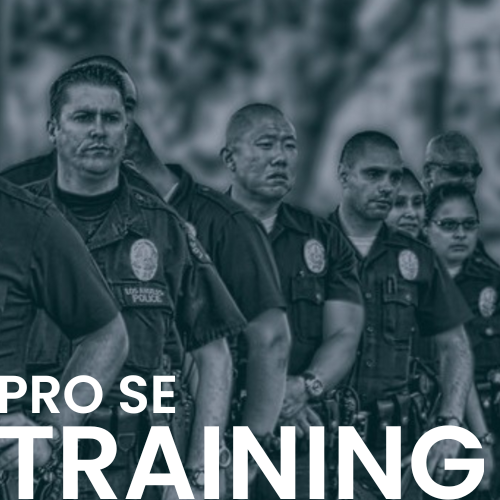
Our training resources support everyone involved in the criminal disclosure process, including law enforcement, prosecutors, judges, defense counsel, public defenders and legal aid practitioners, and self-represented litigants.